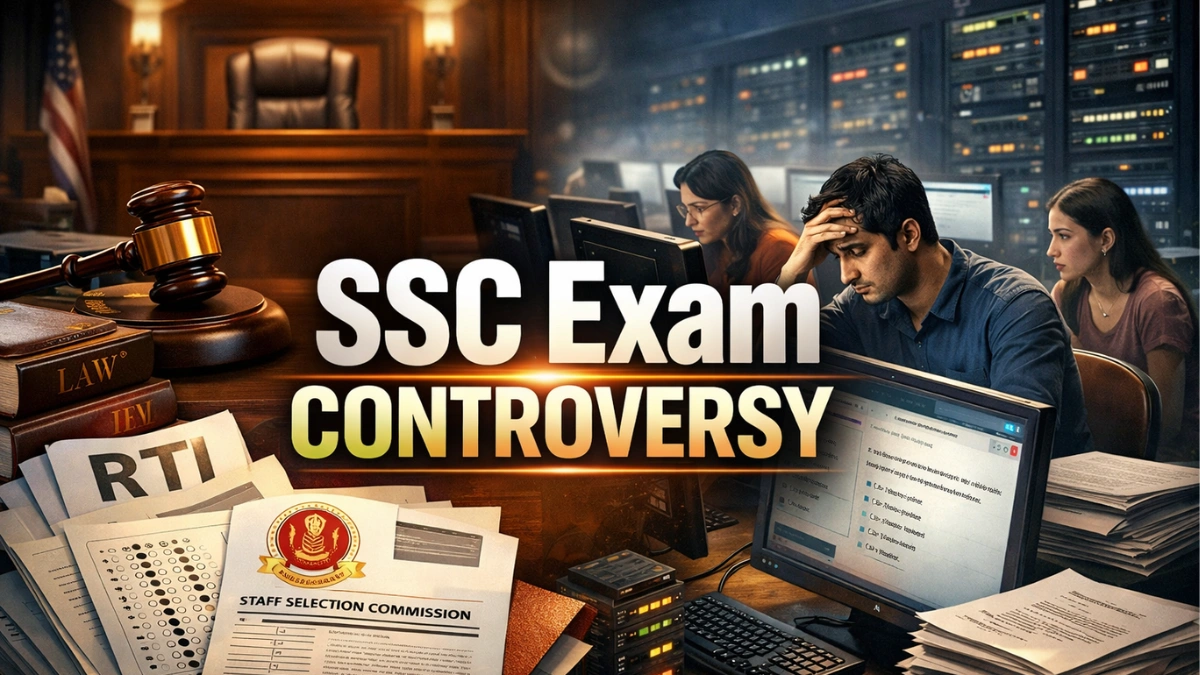
A long-running controversy surrounding the Staff Selection Commission (SSC) examination system has now taken a decisive legal turn. Eduquity Technologies Pvt. Ltd., one of the companies responsible for conducting SSC examinations, has filed a ₹2.5 crore defamation lawsuit against popular YouTuber and content creator Nitish Rajput in a Delhi court.
The legal action stems from a video released by Rajput, in which he raised questions about the SSC’s tendering process and the selection of private vendors for conducting recruitment examinations. The video relied on information obtained through Right to Information (RTI) responses, official documents, and publicly available records.
Allegations Raised in the Video
In his analysis, Nitish Rajput pointed to changes in tender rules, operational procedures, and alleged lapses in exam management. He argued that these developments could have serious implications for the transparency, fairness, and integrity of SSC examinations. The video also referenced recurring complaints from candidates, including server crashes, last-minute exam cancellations, centre mismanagement, and technical glitches during computer-based tests.
The content quickly gained traction among government job aspirants, many of whom have long voiced concerns about the conduct of SSC exams across the country. The video became a focal point for online discussions, student forums, and aspirant communities.
Eduquity’s Response and Legal Claims
Eduquity Technologies has strongly denied the allegations made in the video. In its defamation suit, the company has claimed that the content is misleading, factually incorrect, and damaging to its professional reputation. The firm has sought monetary compensation of ₹2.5 crore and has requested the court to direct the removal of the video from online platforms.
According to Eduquity, the claims made in the video could undermine public trust in the examination process and unfairly malign a company operating under government-approved procedures.
Rajput Refuses to Take Down Video
Nitish Rajput has refused to remove the video, maintaining that his content is based on verified RTI replies and official documents. He has stated that the video reflects genuine concerns raised by lakhs of SSC aspirants and is intended to promote transparency and accountability in public recruitment processes.
Rajput has also emphasized that questioning systems and policies using publicly available information falls within the scope of responsible journalism and public interest discourse.
Aspirant Groups Seek Judicial Intervention
With the dispute now before the court, the controversy has moved beyond social media debates and student protests into the judicial domain. Several student and aspirant organizations have reportedly begun mobilizing support around the case.
Sources indicate that these groups are considering approaching the Supreme Court, seeking an independent judicial review of the SSC recruitment framework. Their demands include scrutiny of the vendor appointment process, examination infrastructure, and accountability mechanisms for handling technical and administrative failures.
Broader Context and Public Scrutiny
The renewed focus on the SSC comes at a time when public sector recruitment systems across India are facing increased scrutiny. In recent years, the Supreme Court has intervened in multiple cases involving examination irregularities, paper leaks, and systemic failures, setting precedents for judicial oversight in recruitment matters.
This has raised expectations among aspirants that similar intervention may be sought in the SSC case if concerns continue to escalate.
What Lies Ahead
For now, the legal proceedings between Eduquity Technologies and Nitish Rajput are ongoing. The outcome of the case could have wider implications, not only for digital content creators and whistle-blower style reporting, but also for transparency in India’s competitive examination ecosystem.
For millions of government job aspirants, the case has become symbolic of a larger demand for reform, accountability, and trust in one of the country’s most important recruitment bodies.
About The Author